
Table of Contents
In Lagos, child rights are primarily governed by the Lagos State Child’s Rights Law (2007). Lagos was one of the first states in Nigeria to domesticate the Federal Child Rights Act of 2003, and it remains one of the most proactive states in enforcing these protections.
Here is a breakdown of the key protections and recent updates as of 2026:
1. The “Ban” on Corporal Punishment
There is a significant distinction between the law (which is general) and government policy (which is specific):
In Schools: As of March 2025, the Lagos State Government has strictly reaffirmed the ban on flogging in both public and private schools. The Commissioner for Basic and Secondary Education emphasized that the state now prioritizes counselling and “positive reinforcement” (such as minor chores or loss of privileges) over physical pain.
At Home: The law remains more “grey” here. Under Section 10 of the Lagos Child Rights Law, every child is entitled to “respect for the dignity of their person” and must not be subjected to “torture, inhuman or degrading treatment.” However, like the national law, it does not explicitly criminalize “reasonable” parental discipline unless it results in visible injury or abuse.
2. Core Rights Under the 2007 Law
The law outlines several fundamental rights that are legally enforceable in Lagos:
Right to Survival and Development: The state and parents are legally obligated to ensure the child’s basic needs are met.
Right to Dignity: Protection from physical, mental, or emotional injury and abuse.
Protection from Exploitation: This includes a strict ban on child labor (e.g., street hawking during school hours), child marriage, and child trafficking.
The Family Court: Lagos established specialized Family Courts to handle matters involving children (both offenders and victims) to ensure they are not processed through the standard adult criminal system.
3. Safeguarding & Reporting Mechanisms
Lagos is unique in Nigeria for its Executive Order on Safeguarding and Child Protection. This policy mandates that:
All schools and child-centered institutions must have a formal Child Protection Policy.
Mandated Reporting: Teachers, doctors, and caregivers are legally required to report suspected abuse to the authorities.
The DSVA: The Lagos State Domestic and Sexual Violence Agency (DSVA) is the primary body that handles reports of abuse.
Summary Table: Child Protection in Lagos
Issues and their Statuses in Lagos
Flogging in Schools: Prohibited (per 2022/2025 government policy)
Child Marriage: Illegal (minimum age is 18)
Street Hawking: Illegal (especially during school hours)
Child Abandonment: Criminal Offense
Physical Abuse: Criminal Offense (under the Criminal Law of Lagos)
How to Report Abuse in Lagos
If a child’s rights are being violated, the Lagos State Government provides toll-free emergency lines:
671 (Shortcode for the DSVA)
08000 333 333 (Toll-free hotline)
The Price of Greed: A Story About Life, Consequences and the Value of Saving a Human Being
There are moments in life when a person is given a...
How the Lagos Family Court Works
The Lagos Family Court is a specialized division o...
Privacy Policy
Privacy Policy for Yosone.com Effective Date: 06t...
BABA DOS NOIBI ( THE WALIY OF OUR TIME) AND THE BEST MUSLIM I EVER MET Ishaq Kunle Sanni
BABA DOS NOIBI ( THE WALIY OF OUR TIME) AND THE BE...
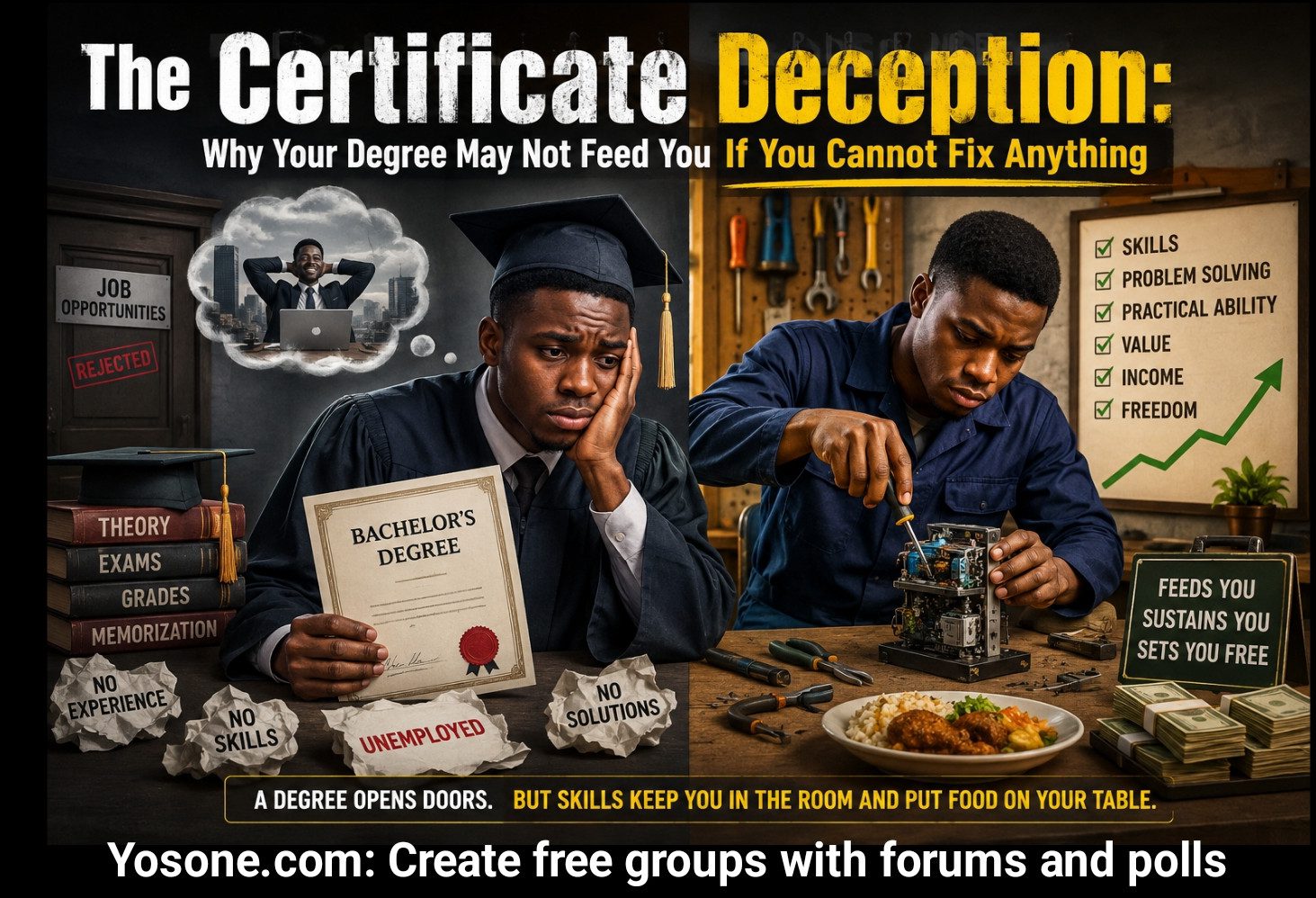
The Certificate Deception: Why Your Degree May Not Feed You If You Cannot Fix Anything
Let me tell you a story that is playing out in alm...
Corporal Punishment in Nigeria
In Nigeria, corporal punishment is a deeply comple...